
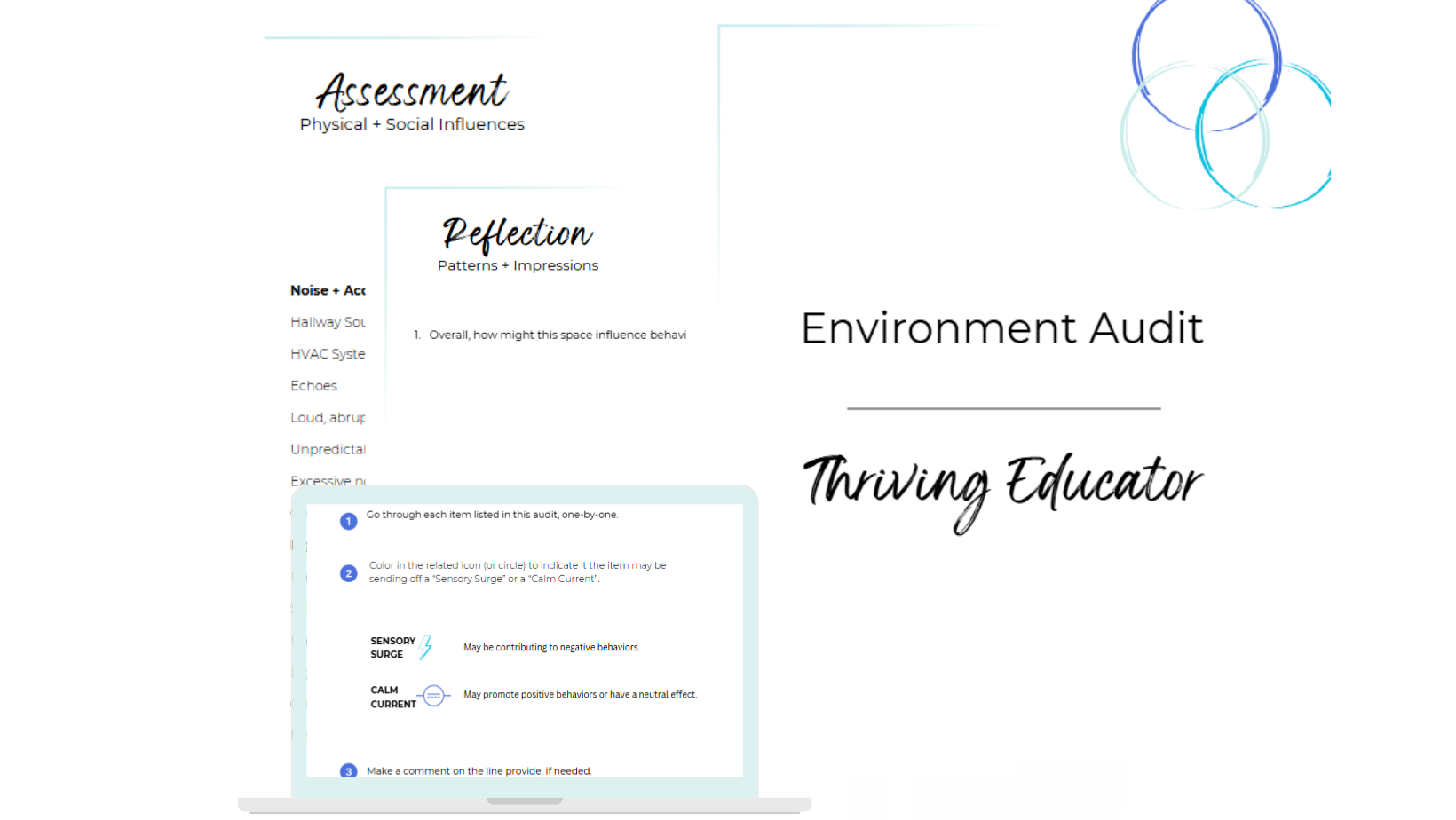
A practical tool to help educators notice how space and sensory demands impact stress, regulation, and behavior.
Behavior does not happen in isolation.
It is shaped by environment, pace, expectations, and the sensory demands adults and students navigate throughout the day. When pressure is high, even small environmental stressors can amplify reactivity and overwhelm.
The Environment Audit is a reflective tool designed to help educators and leaders step back and notice how the learning environment may be supporting or straining regulation, before behavior escalates.
This is not about fixing students.
It’s about adjusting conditions so steadier responses are possible.
What is the Environment Audit?
-
A brief, reflective tool for educators and leaders
-
Designed to identify environmental stressors and supports
-
Focused on prevention rather than reaction
-
Useful in classrooms, programs, and shared spaces
The Environment Audit is not:
-
A checklist for compliance
-
A student behavior intervention
-
A one-time fix
-
A replacement for adult regulation skills
Environment matters most when adults have the capacity to notice and respond intentionally.


How do I use the Environment Inventory?
Start small.
Use the audit to observe one space or routine, not everything at once. Notice patterns rather than searching for problems.
This tool works best when paired with adult regulation and consistent reflection. It is meant to support thoughtful adjustments, not perfection.
Over time, these small shifts can reduce strain, increase predictability, and support steadier responses from both adults and students.
Who is the Environment Audit for?
-
Classroom educators
-
School and program leaders
-
Support staff in high-demand settings
Especially those who want to:
-
reduce unnecessary overwhelm
-
improve consistency in behavior response
-
support regulation without adding complexity
-
strengthen prevention efforts

Thriving Educator supports schools and programs by building adult capacity first, so behavior responses are steadier, communication is clearer, and systems hold under pressure.
Charle Peck, LCSW, M.Ed. is the founder of Thriving Educator, Keynote Speaker and Lead Trainer.